Building a successful software product takes more than writing code. You need a clear product vision, the right technology, thoughtful design, reliable engineering, thorough testing, and continuous improvement.
Sysinfo provides product development services that help businesses turn ideas into reliable, scalable, and market-ready software products. Whether you are developing a new product, enhancing an existing application, modernizing legacy software, or expanding your engineering capacity, we work with you to support your product goals at every stage.
From early-stage product planning to development, quality assurance, deployment, and ongoing maintenance, our approach focuses on creating software that solves real problems and supports long-term growth.
Have a product idea or an existing application to improve? Let’s discuss your requirements and explore the right development approach for your business.
CTA: Discuss Your Product Requirements | Request a Consultation
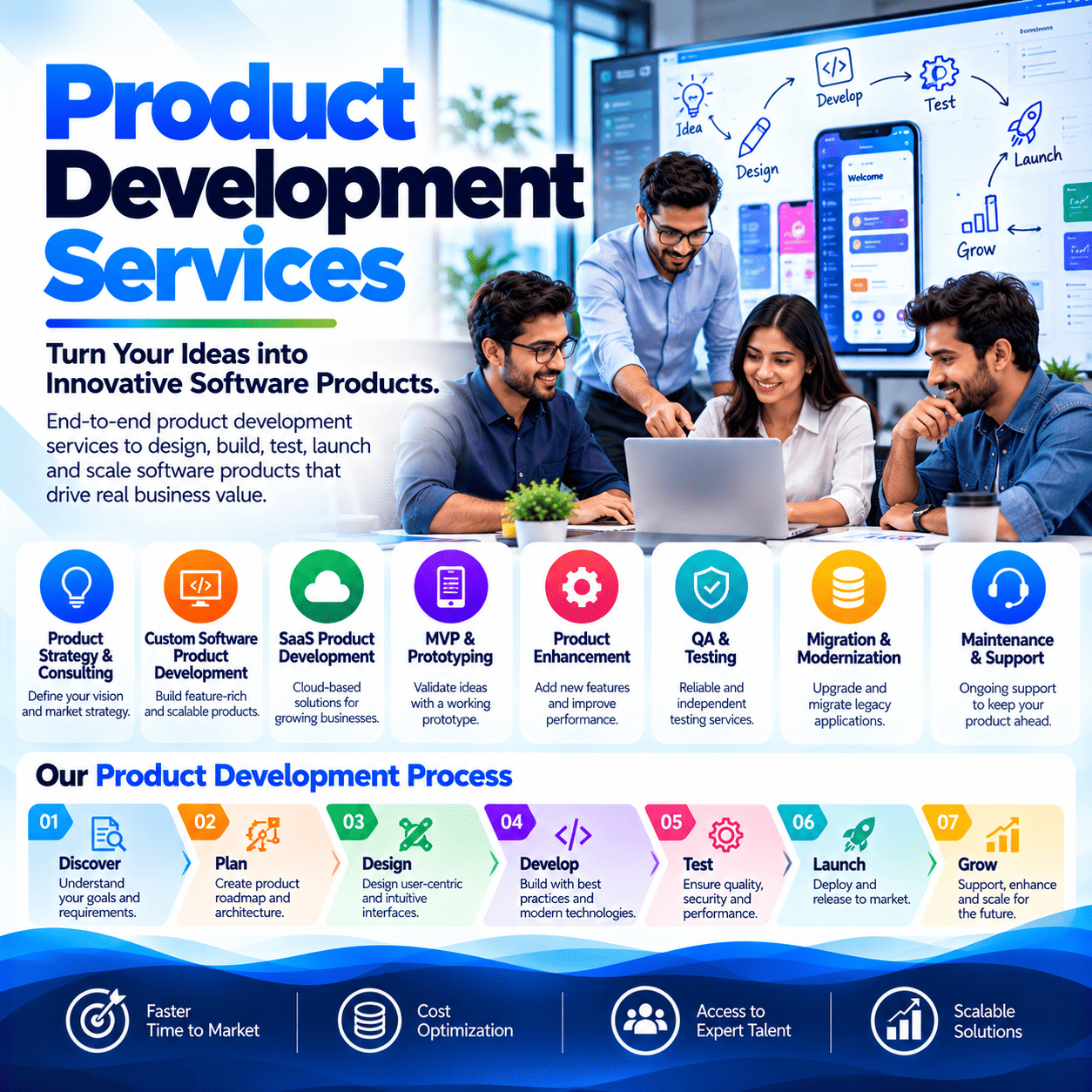
Product development services cover the complete process of planning, designing, building, testing, launching, and maintaining a software product. These services help businesses transform an idea or business requirement into a usable digital solution that can evolve as customer expectations and market conditions change.
Depending on your needs, product development may involve creating a new application from scratch, adding features to an existing product, integrating third-party systems, migrating software to a new platform, improving performance, or maintaining a product throughout its lifecycle.
At Sysinfo, we focus on aligning technology decisions with your product objectives. Our goal is to help you develop software that is practical to maintain, flexible enough to grow, and designed around the needs of its users.
Every successful product starts with a clear understanding of the problem it needs to solve. We help you organize your ideas, clarify requirements, and identify the essential capabilities of your proposed product.
Our product discovery support can include:
This foundation helps your team make informed decisions before committing significant time and resources to development.
When standard software cannot meet your business requirements, a custom-built product can provide greater flexibility and control. Sysinfo supports the development of software products tailored to your workflows, users, and operational goals.
Our custom software product development services can include:
Web-based software applications
Desktop applications
Enterprise software solutions
Business workflow applications
Customer and employee portals
API-driven applications and integrations
Feature development and application extensions
We focus on maintainable architecture, clear functionality, and practical development decisions that support future enhancements.
Software as a Service (SaaS) products need to deliver a consistent experience while supporting evolving user needs and business growth. A strong technical foundation helps SaaS businesses manage new features, integrations, performance, and ongoing product improvements.
Our SaaS product development support can cover:
SaaS application architecture
User registration and account management
Role-based access and permissions
Subscription and billing integrations
API development and third-party integrations
Reporting and analytics capabilities
Product updates and ongoing maintenance
We help businesses plan and develop SaaS applications with scalability, usability, and maintainability in mind. Specific capabilities depend on your product requirements and selected technology stack.
An established software product must evolve to remain useful. New customer expectations, changing workflows, and business expansion can create a need for new features and improved functionality.
Sysinfo helps you enhance existing products through:
New feature development
User interface and experience improvements
Workflow optimization
API and system integration
Performance improvements
Architecture refinement
Compatibility and functionality updates
We assess the existing product and prioritize enhancements according to business value, technical feasibility, and your roadmap.
If you want to validate a product idea before investing in a full-scale release, a minimum viable product (MVP) can help you test essential functionality and gather early feedback.
Our MVP and prototyping support includes:
Defining core product requirements
Prioritizing essential features
Developing prototypes and proof-of-concept solutions
Building an initial usable product
Testing key workflows
Preparing for feedback-driven iterations
The objective is to create a practical starting point that helps you evaluate your product direction and make better-informed decisions about future investment.
Product quality affects user trust, reliability, and ongoing support requirements. Testing throughout the development lifecycle helps identify defects before they affect users.
Our software testing and quality assurance services can include:
Functional testing
Regression testing
Integration and API testing
Web and mobile application testing
Performance testing
Compatibility testing
User acceptance testing support
Manual and automated testing, where appropriate
We align testing activities with your product's risks, expected usage, and release requirements to help improve reliability and release confidence.
Older software may become difficult to maintain, integrate, or extend as business requirements change. Product modernization helps you address these limitations while protecting the value of your existing application.
Sysinfo can support:
Legacy application modernization
Platform and framework migration
Software porting across supported environments
Database migration planning
API and integration updates
Architecture improvements
Compatibility and regression testing
We evaluate the existing application, dependencies, and business requirements before recommending an appropriate modernization path.
Software development does not end when a product launches. Applications need ongoing attention to remain functional, compatible, secure, and useful.
Our product maintenance and support services may include:
Bug fixing and troubleshooting
Software updates and patches
Application performance monitoring support
Compatibility updates
Minor feature enhancements
Technical documentation
Release and deployment assistance
Ongoing maintenance planning
Support arrangements can be structured around your application's needs, agreed service scope, and operational priorities.
Your product may need to work with existing business systems, external platforms, or customer environments. Well-planned integrations can reduce manual work and improve the overall user experience.
Our integration and professional services can include:
API integration and development
Third-party software integration
Application configuration and customization
Data exchange and workflow integration
Installation and deployment assistance
Technical troubleshooting
Implementation documentation
Product onboarding and support
We work to ensure that integrations align with your existing architecture and business requirements.
AI-assisted engineering can support selected development activities, but it should be applied with appropriate technical oversight. The right approach depends on the product, its data, security requirements, and the maturity of the development process.
Where suitable, AI-assisted workflows may help with:
Development planning and documentation
Code suggestions and refactoring assistance
Test-case generation
Debugging support
Technical knowledge retrieval
Repetitive development workflow automation
Generated code and AI-assisted outputs should be reviewed, tested, and assessed for security and correctness before they are used in production. AI is a development aid, not a replacement for engineering judgment.
Step 1: Requirement Discovery
We discuss your business goals, users, product requirements, technical constraints, and expected outcomes.Step 2: Planning and Architecture
We define the development scope, prioritize features, evaluate technology options, and establish an implementation plan.Step 3: Design and Prototyping
Where required, we develop interface concepts, prototypes, and workflows to clarify the intended user experience before implementation.Step 4: Product Development
The team builds the agreed functionality using suitable technologies and development practices, with progress reviewed against the project plan.Step 5: Quality Assurance
Testing helps verify functionality, identify defects, and evaluate relevant performance, compatibility, and integration requirements.Step 6: Deployment and Release Support
We prepare the product for release according to the agreed deployment process and environment requirements.Step 7: Maintenance and Continuous Improvement
After release, the product can be refined through fixes, feature enhancements, technical updates, and feedback-driven improvements.The precise process and deliverables are tailored to your product’s complexity, team structure, and delivery model.
Whether you need a new product, improvements to an existing application, or additional engineering capacity, the engagement can be shaped around the agreed scope.
Requirements, implementation, testing, and maintenance all contribute to a dependable product. We emphasize quality across these activities rather than treating testing as a final step alone.
Regular discussions, documented requirements, and progress reviews help stakeholders stay aligned throughout development.
Well-considered architecture, documentation, and consistent development practices can make future changes easier to manage.
Products continue to change after launch. Ongoing development and maintenance support can help you respond to new requirements and evolving customer expectations.

Working with an external product development team can help businesses extend their technical capacity without having to build every capability internally.
Potential benefits include:
Actual cost, delivery time, and productivity outcomes depend on product complexity, scope, team availability, and implementation decisions. We recommend defining measurable goals before work begins.
The right technology depends on your product’s requirements, existing architecture, performance needs, and long-term roadmap. Sysinfo’s website references capabilities across technologies such as .NET, Java, PHP, C++, web and mobile development, and database systems.
Depending on the project, product development may involve:
Technology selection should be based on the product’s needs rather than following trends without a clear business reason.
Your product deserves a development approach that connects technology with real business needs. Whether you are starting with an idea, preparing an MVP, enhancing an established application, or planning a modernization project, Sysinfo can discuss the technical requirements and possible delivery options with you.
Tell us what you want to build, improve, or scale. Let’s explore the right path for your product.
Product development requirements vary by industry. We tailor the technical approach to the intended users, workflows, integrations, and operational needs of each project.
Our services may be suitable for:
Copyright © 2026 Sysinfo Solutions